Responsible development
Growth and stewardship on the same tract
How I help
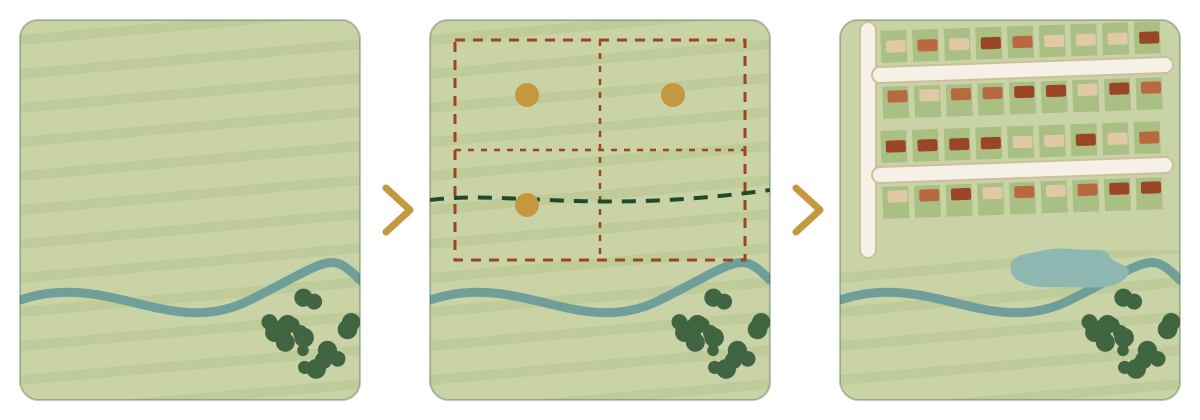
Understand, plan, carry it through
Step 1
Understand the land
Soils, water, wetlands, access, zoning and the programs the land might qualify for, gathered from public records and the right specialists.
Step 2
Plan the mix
Which parts suit a builder, which suit conservation or mitigation, and which should stay in farming, and how each choice affects the others.
Step 3
Carry it through
Represent you in a sale as a single agent, or manage a development as a separate written consulting engagement, coordinating licensed professionals at every step.
What I'm watching in Florida
Seven tools for landowners
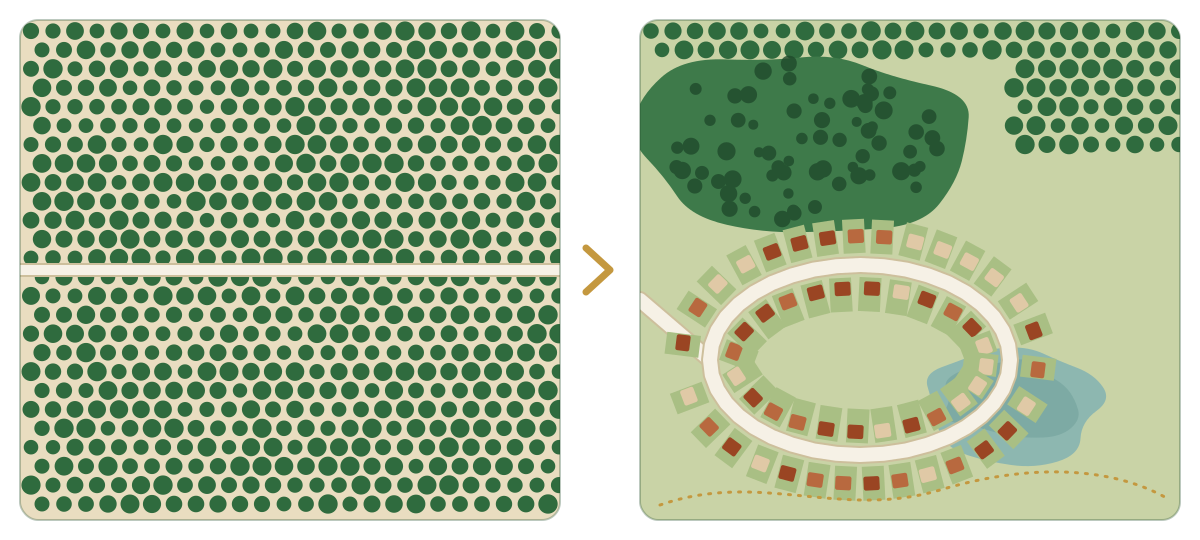
Agrihoods: neighborhoods planned around a working farm
What it is
A residential community designed around a farm that keeps producing, often with a farm stand, shared harvests and trails. In Palm Beach County, Arden was planned around a five-acre community farm and barn. [WLRN, Aug 2019] In east Orange County, The Grow is planned for about 2,200 homes on 1,200 acres around a 9-acre working farm, with just over half of the site reserved from development. [HousingWire, Nov 2026]
What it can mean for you
A farm can be part of what a builder is selling, not only what it is clearing. For a family that wants some land to stay in production, an agrihood plan is one way to put that on the table. It works only when a developer is willing to fund and run the farm over the long term, so it belongs in the deal terms, not just the brochure.
Conservation and clustered subdivisions
What it is
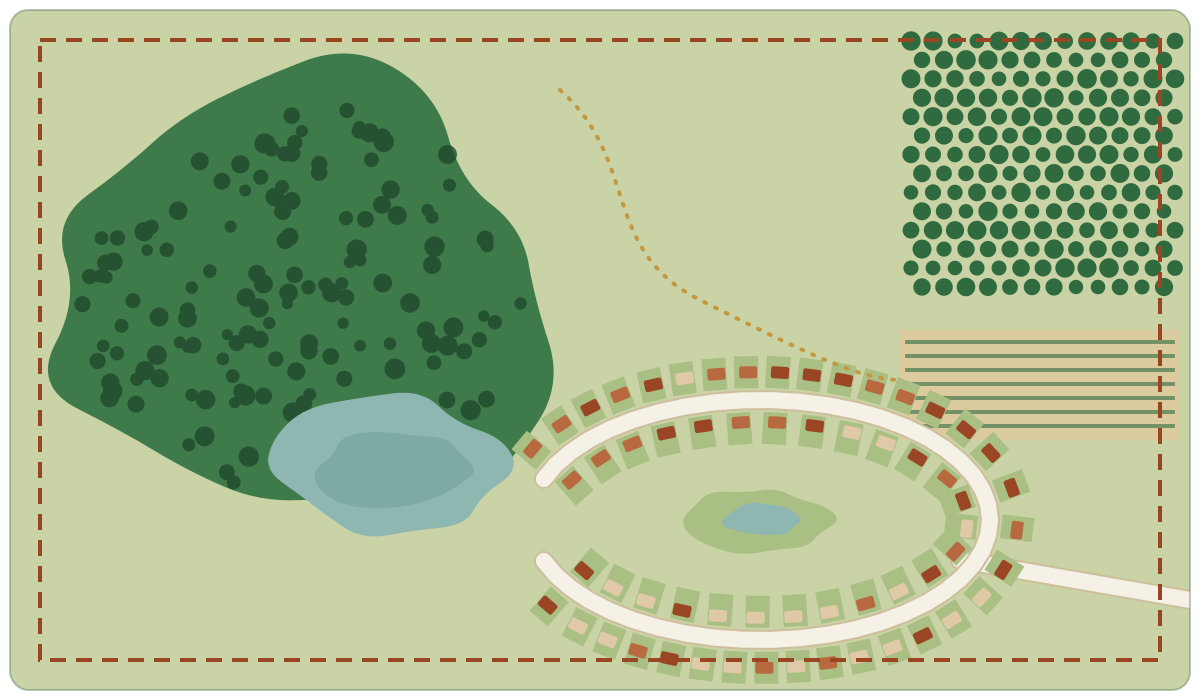
Homes are grouped on smaller lots so that the rest of the tract stays as open space: woods, wetlands, pasture or grove. UF/IFAS Extension describes conservation subdivisions as developments where homes are clustered on small lots with the remaining areas conserved as open space. [UF/IFAS EDIS]
What it can mean for you
The land you care most about can stay intact while the rest of the tract is developed. Whether clustering is allowed, and on what terms, depends on the county's comprehensive plan and land development code, so it is one of the first things I check.
Rural Land Stewardship Areas
What it is
A Florida planning tool that local governments may adopt as an overlay on agricultural and rural land, at the written request of the landowners, to steer development toward some areas and keep others in agriculture and conservation. A stewardship area must be at least 10,000 acres and outside municipalities and established urban service areas. Owners in sending areas can earn transferable stewardship credits once a stewardship easement is placed on that land. [s. 163.3248, F.S.]
What it can mean for you
For families with very large tracts, or neighbors willing to plan together, a stewardship area can turn protected land into credits with value elsewhere. It is a long, county-level process, so it suits families planning in decades, not months.
Rural & Family Lands Protection Program easements
What it is
The Florida Department of Agriculture and Consumer Services buys permanent rural lands protection easements, which purchase the development rights on productive agricultural land while the owner keeps farming. [FDACS, RFLPP] [s. 570.71, F.S.]
What it can mean for you
A family can be paid for development rights, keep the land in agriculture and keep ownership. Applications are ranked against other projects, and the restrictions are permanent, so it is a decision for the whole family and its advisers.
Mitigation banking and regional offsite mitigation areas
What it is
Florida law provides for mitigation banks and offsite regional mitigation, where land is restored or preserved to offset permitted wetland impacts elsewhere. [s. 373.4135, F.S.] [s. 373.4136, F.S.] The Department of Environmental Protection also describes Regional Offsite Mitigation Areas (ROMAs). [FDEP, ROMAs]
What it can mean for you
Wet or low ground that a farm works around can sometimes be an asset. Creating a bank is technical and long term, with perpetual protection and monitoring, so it calls for experienced ecological and legal help from the start.
The Florida Wildlife Corridor
What it is
The Florida Wildlife Corridor Act describes the corridor as more than 18 million acres, 10 million of which are conservation lands, and states its purpose as creating incentives for conservation and sustainable development. Lands in the corridor that are not yet conserved are called opportunity areas. [s. 259.1055, F.S.]
What it can mean for you
If your land sits in an opportunity area, conservation buyers and easement programs may see it differently than a homebuilder does. That can open a conservation sale or easement as one path alongside the others.
Working-lands solar leases
What it is
Since 2021, Florida law makes a solar facility a permitted use in all agricultural land use categories and agricultural zoning districts in unincorporated areas, subject to the setbacks and buffers for similar uses. [s. 163.3205, F.S.]
What it can mean for you
A solar lease can bring long-term income from part of a property while the rest stays in production. Leases run for decades and limit what you can do with the leased land, so the term, payments, access and removal at the end deserve the same care as a sale contract.
Conservation and development on one plan
Who I work with
Landowners and families
Owners of farms, groves, ranches and timber tracts who want a plan that protects what matters to them. In a sale, I represent you as a single agent, in writing.
Builders and developers
Development consulting and project management, as a separate written consulting engagement. I will not take an engagement that conflicts with a landowner I represent.
Conservation partners
Easement programs, mitigation bankers and conservation buyers, when a landowner I represent wants that path explored.